Read Genesis 17 at Bible Gateway.
The Hebrew paragraphs:
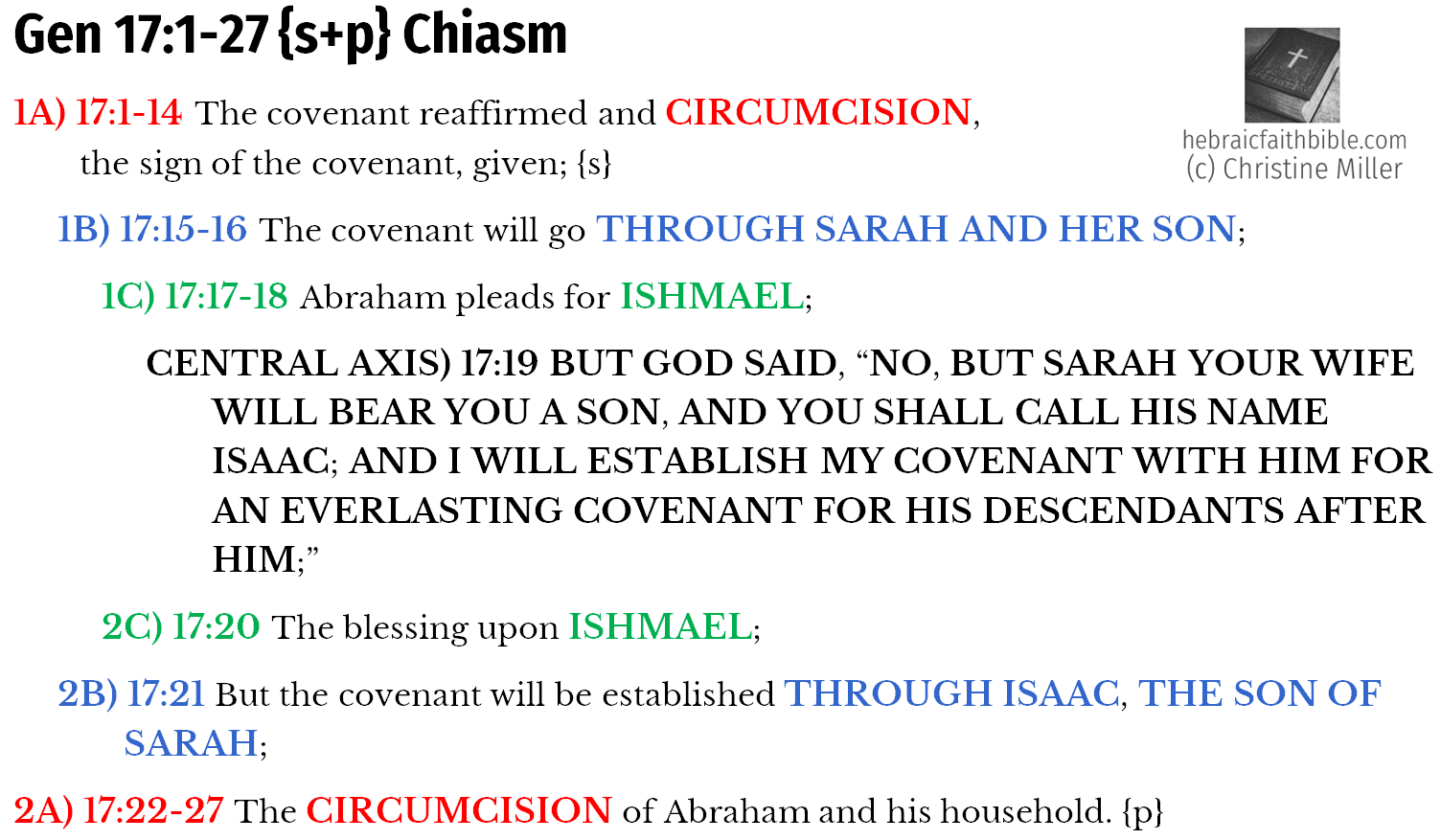
17:1-14 {s} Circumcision, sign of the covenant, given
17:15-27 {p} Promise given of seed through Sarah (Isaac)
Genesis 17 ends with the first {p} Hebrew paragraph marker that there has been in several chapters. It means that …
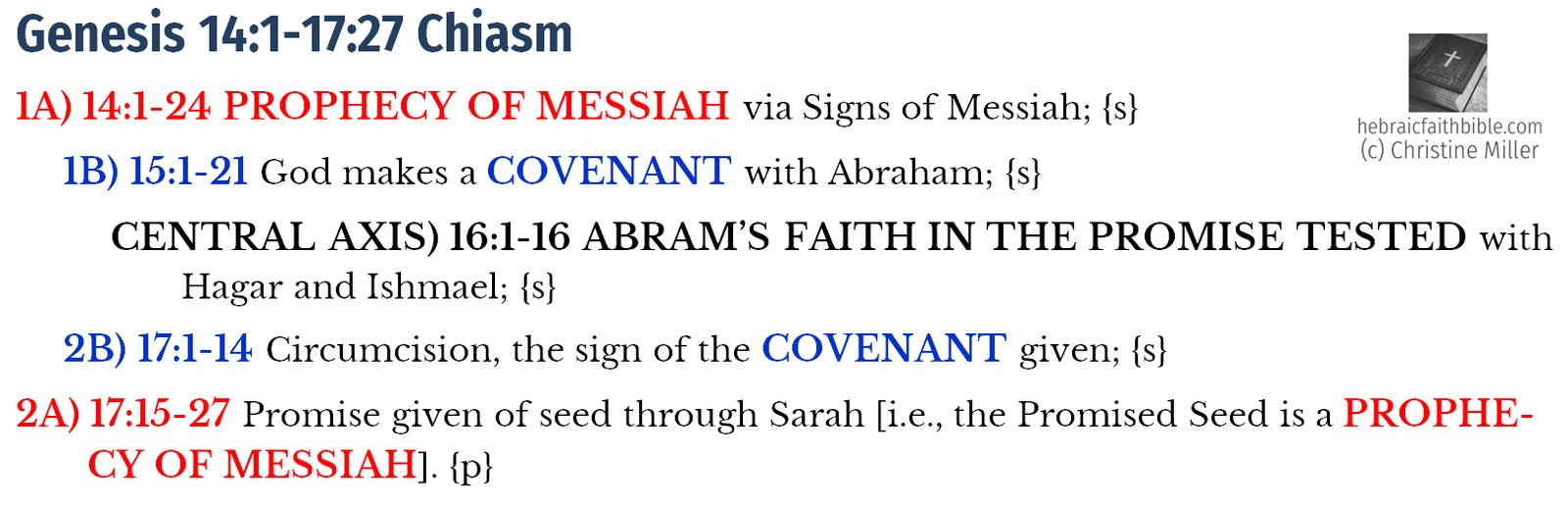
14:1-24 {s} Signs of Messiah in Abram’s victory over enemies
15:1-21 {s} Promise reaffirmed by covenant
16:1-16 {s} Abram’s faith in the promise tested with Hagar and Ishmael
17:1-14 {s} Circumcision, sign of the covenant, given
17:15-27 {p} Promise given of seed through Sarah (Isaac)
… all makes a single Strong Theme. By the Teaching Tool of Common Theme, we find that each of the {s} weak paragraphs within this section shares the characteristic of someone whom Abram considered for his heir.
1) Lot, his brother’s son, his blood relation (Gen 14:11-12);
2) Eliezer, one born in his house (Gen 15:2-3);
3) Ishmael, the son of his flesh (Gen 16:1-2).
The Strong Theme introduces YHVH’s covenant with Abraham, which would be passed down to his heir, more valuable than land or wealth.
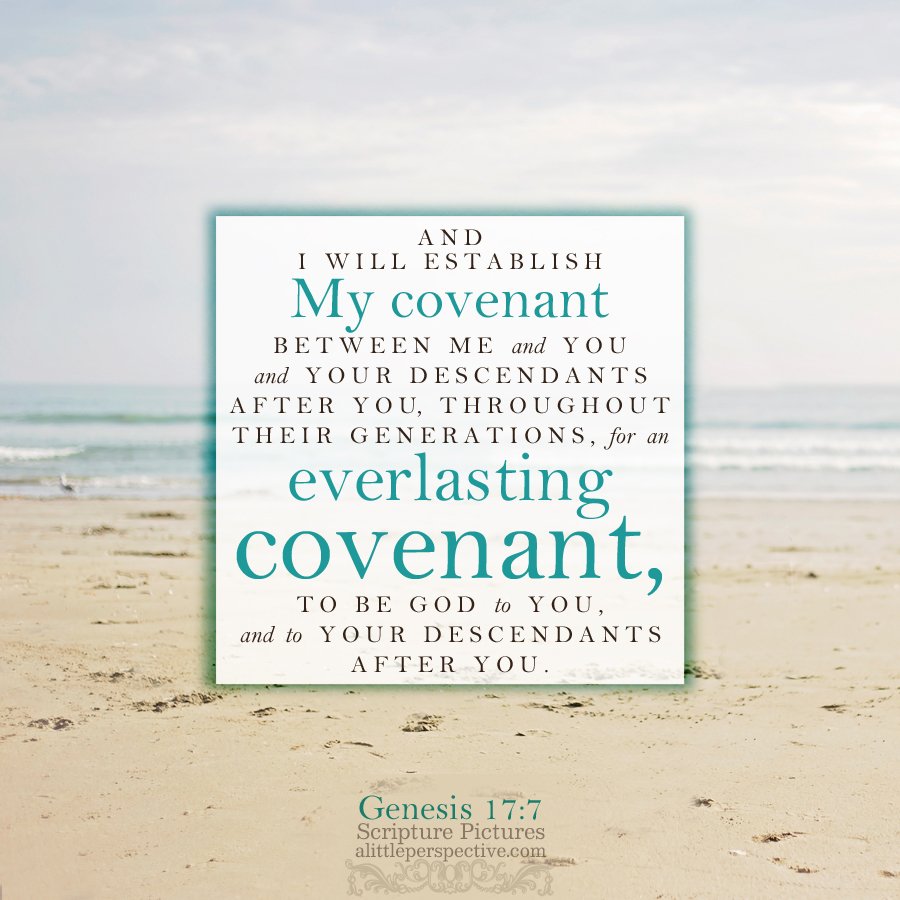
‘And I will establish My covenant between Me and you and your offspring after you throughout their generations for an everlasting covenant, to be God to you and to your offspring after you.’ Gen 17:7
And his heir, the promised seed, would be Sarah’s son, who would inherit the covenant with God.
14:1-17:27 {sx4+p} Strong theme: The promised seed, Sarah’s son, will be Abraham’s heir, not the seed of his father’s house (Lot) nor the seed of his own house (Eliezer) nor the seed of his flesh (Ishmael).
Why This Matters: As it had ceased to be the way of women with Sarah (Gen 16:1-2), it was humanly impossible for her to bear children, thus the laughter. Her son would be of miraculous birth, and this History Prophesies that the Promised Seed of Gen 3:15, who is Messiah Yeshua, would likewise be of miraculous birth.
If there are questions, these are good resources:
Gen 17:1-27 Chiastic Structure – Christine Miller
Gen 14:1-17:27 Chiastic Structure – Christine Miller
Covenant – Jewish Encyclopaedia
The Names of God in the Old Testament – Blue Letter Bible





Leave a Reply