Read James 2 here (text coming …) or at Bible Gateway.
The Greek Testament does not contain paragraph markers.
The Chiastic structure:
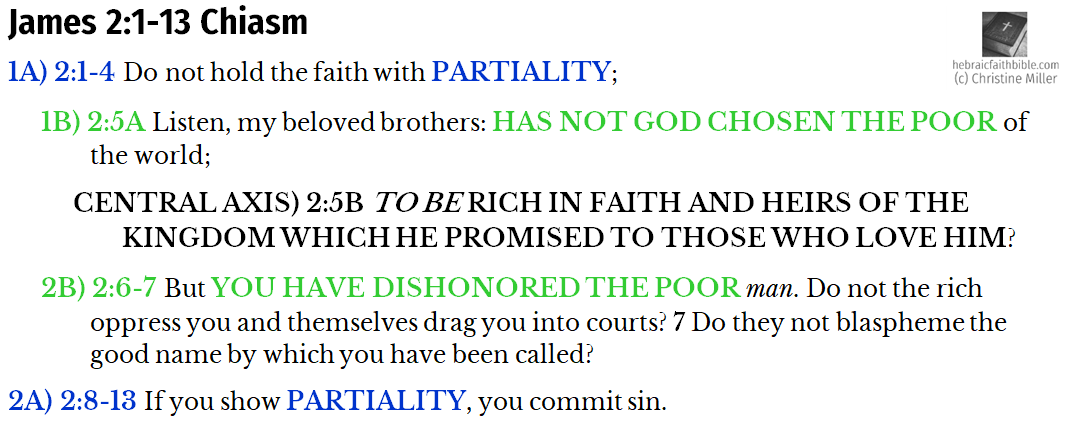
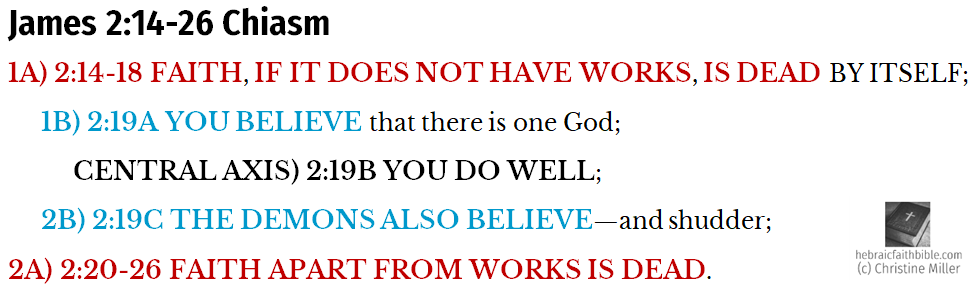
James, the brother of Jesus, was the pastor of the assembly of believers in Jerusalem before he was martyred in 62 AD. He is addressing a specific false doctrine in the Church, already at work in his day, likely stemming from a misreading of Paul’s letters. Paul wrote,
For by grace you are saved through faith, and this is not from yourselves; it is the gift of God, not from works, lest anyone should boast. Eph 2:8-9
Paul was addressing the belief that if someone were diligent enough to keep the Torah Commandments, he could earn his salvation as a result of his good works. But taking Paul out of context birthed the opposite heresy:
“Since I believe in God (have faith), therefore I am saved; and since works cannot save me, then I can lie, cheat, steal, and live a reprobate life.”
The adherents of this heresy completely ignored the very next sentence in Paul’s letter:
For we are His workmanship, created in Christ Jesus for good works, which God prepared beforehand that we should walk in them. Eph 2:10
James counters that someone can make a mental affirmation of a truth: ‘I believe in God, that He is,’ but as in the case of demons who also believe that God exists, if that mental affirmation has not rooted in the heart to produce a corresponding change in nature, evidenced by good fruit (works) now borne in the life, then salvation, which produces that change, has not taken hold.
Faith is like a tree. The seed of the Word is implanted in the soil of the heart (Jam 1:21), and that seed, if believed, springs up, grows, and produces fruit. It’s the nature of the tree to produce that fruit; the tree cannot fail to produce it. If the fruit is never present, then there is something wrong with the tree. Jesus said, “You will know them by their fruit” (Mat 7:16-20).
So, the tension between faith and works emerged early in Church history. We have made them opposed: ‘faith versus works;’ but they are not opposed. They are two sides of the same coin: ‘faith and works.’ They are sisters, like mercy and truth, who walk hand in hand.










Leave a Reply