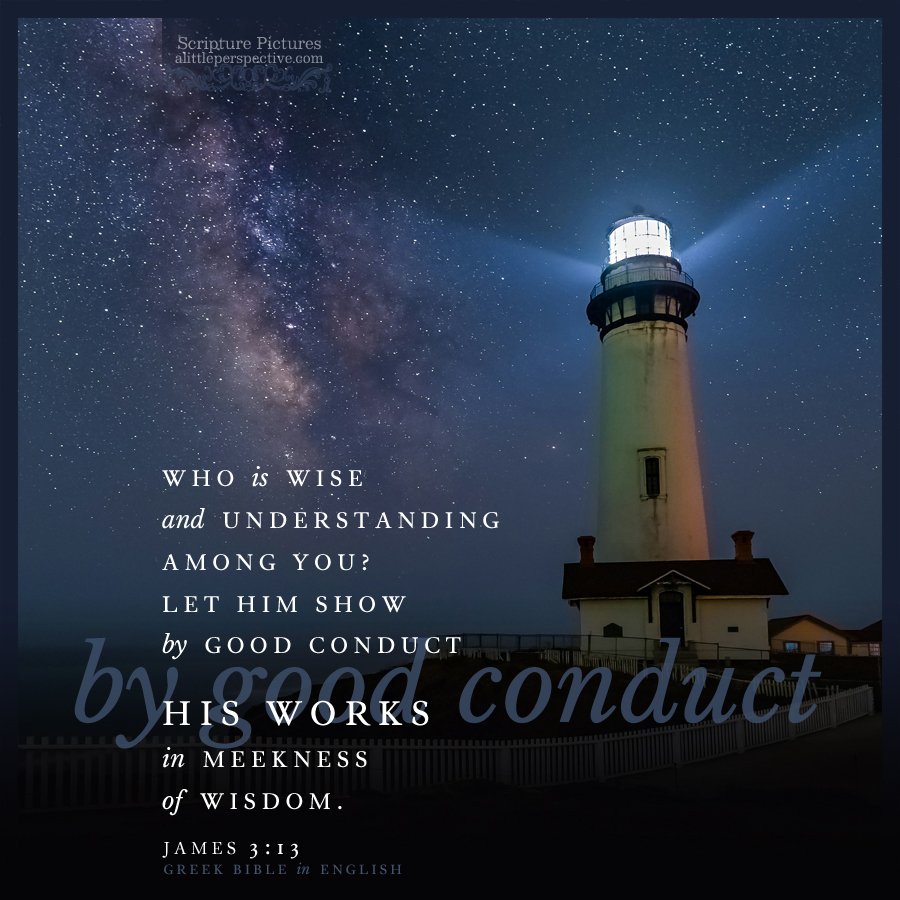
Read James 3 here (text coming …) or at Bible Gateway.
The Greek Testament does not contain paragraph markers.
The Chiastic structure:

For in many things we all stumble. If anyone does not stumble in word, this one is a perfect man, able also to bridle the whole body. Jam 3:2
To stumble, according to the Septuagint Hebrew equivalent, Strong’s H3782 כשל kashal, is to totter or waver through weakness of the ankles (Gesenius). The Natural Picture of tripping is painting a spiritual picture of moral failing. We all stumble.
But the perfect man does not stumble in his words. “Perfect,” as it is defined biblically, does not mean “flawless” as we often imagine. Instead, think of it as something finished, completed, or arrived at its goal. Thus the mature man is able also to bridle, or rein in, his whole body.
Then what is the difference between the man able to rein in his tongue, and thus his whole body, the one who stumbles in his words, with a tongue set on fire by Hell?
The one who is wise and understanding conducts himself in purity, peaceably, gently, reasonably, mercifully, impartially, and without hypocrisy. His wisdom is from above. If wisdom does not have these qualities, then it is not wisdom, is it? The wise man rules his mental and emotional state instead of being tossed about by them.
But then there is the man who conducts himself in bitterness, in jealousy, in selfish ambition, in boasting: exhibiting traits that are earthly, sensual, and demonic. This man is ruled by his mental and emotional states, and stumbles because of them. The outpouring of his mouth, in bitterness, selfishness, and boasting, is as unrestrained as his emotions.
Yet, “If any of you lacks wisdom, let him ask for it from God, who gives to all generously and without reproach, and it will be given to him” (Jam 1:5). God is ready to help anyone who has stumbled to regain his feet if he will ask!
If there are questions, this is a good resource:
There is Too Much, Let Me Sum Up – Christine Miller
“Our feelings, which are governed out of our thoughts, and the strongholds of our hearts, in turn govern our habitual actions, and thus our character.”










Leave a Reply