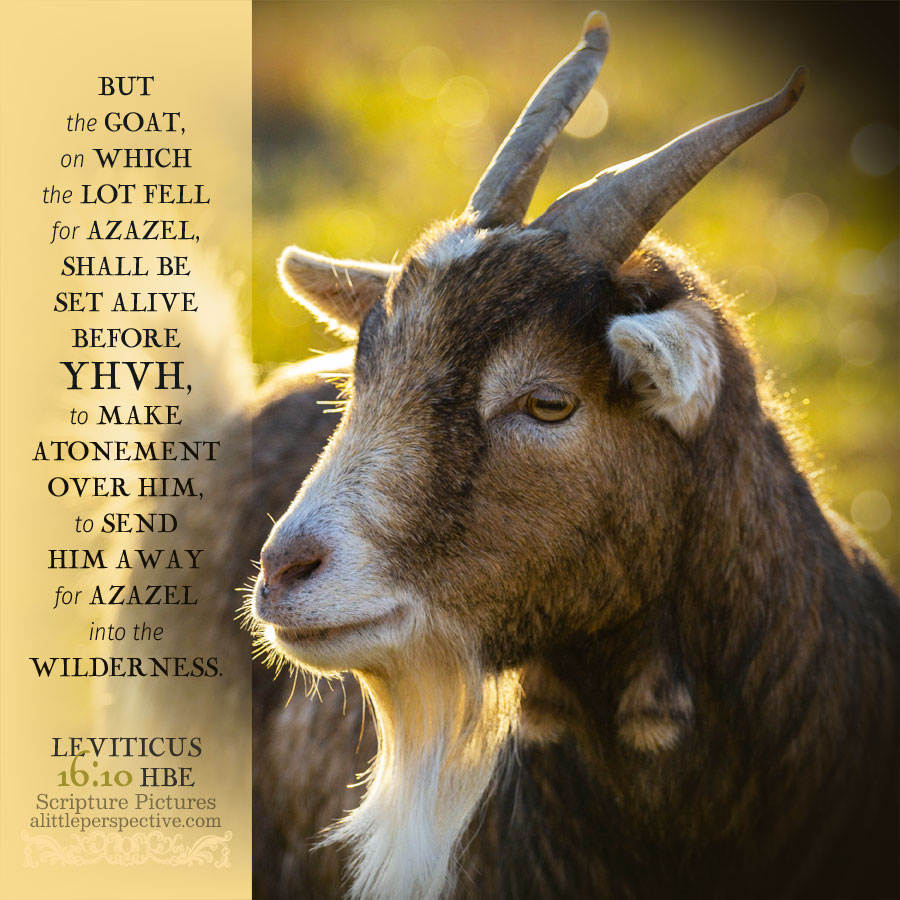
Read Leviticus 16 at Bible Gateway.
Leviticus 16 describes the annual ceremony by which the High Priest brings the blood of the atonement into the Most Holy Place, to make atonement for the Most Holy Place, the tabernacle, the altar, the priests, and all the congregation of Israel. In fact, really the entire first seventeen chapters of Leviticus is about the Day of Atonement.
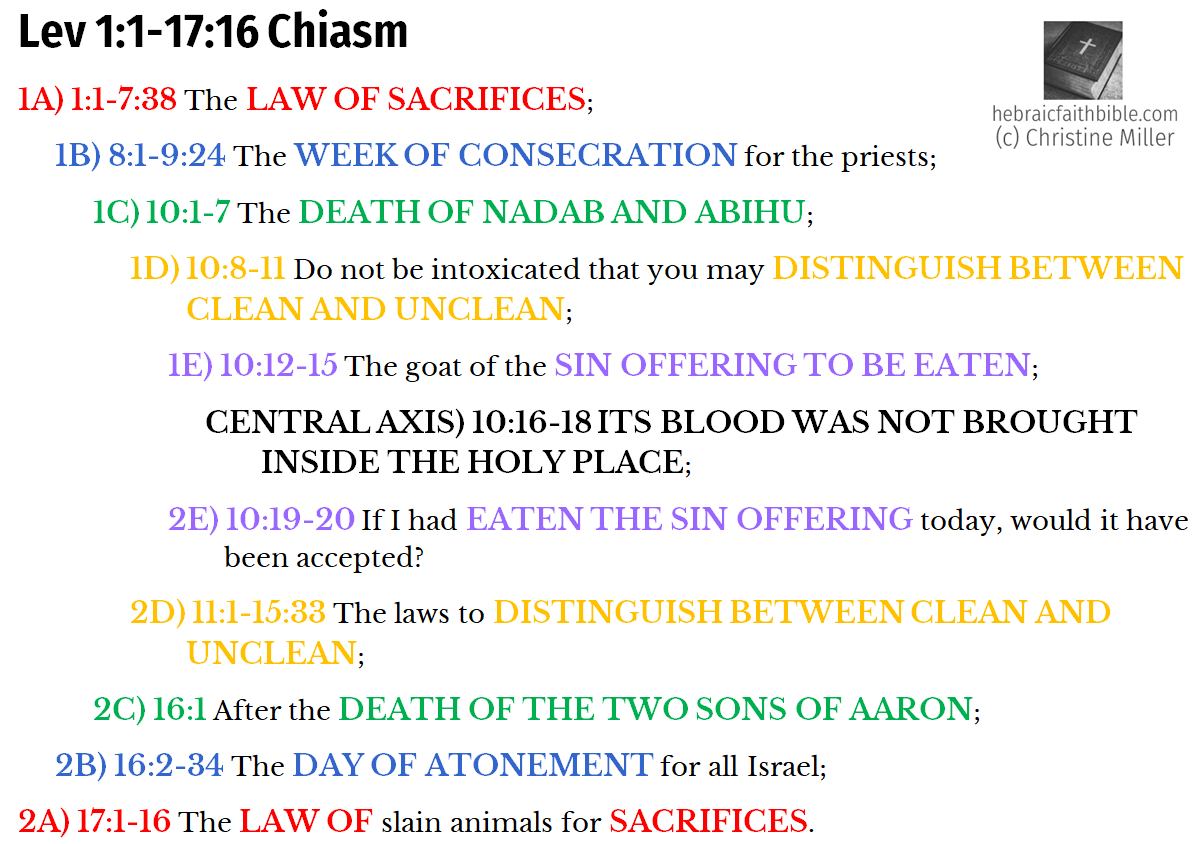
The central axis of this Chiastic Structure is Moses telling Aaron that since the blood of the goat was not brought into the Holy Place, the goat should have been eaten. We only find out in chapter 16, that the blood of the goat that Moses was talking about, was only brought into the Most Holy Place once per year, on the Day of Atonement. The central axis is about the Day of Atonement.
The law of the sacrifices had to be taught first, so that the proper sacrifice could be brought on the Day of Atonement. Aaron and his sons had to be consecrated first, so that the High Priest could bring the blood into the Most Holy Place on the Day of Atonement. The laws to distinguish between clean and unclean had to be taught first, so that Israel would know what uncleanness was being atoned for on the Day of Atonement.
‘Atonement’ is in Hebrew, kaphar, Strong’s H3722, the same root from which the Hebrew ‘mercy seat’ comes.
kaph כ, ך = open palm (bend, open, allow, tame)
pey פ, ף = mouth (open, blow, scatter, edge)
resh ר = head of man (head, first, top, beginning)
The Hebrew Root Word parable is of the Father’s open palm (kaph) of blessing covering over the open wound (of the soul, pey) of the man (resh).
Why This Matters: An English dictionary will reveal that ‘atonement’ comes from the Middle English ‘at one;’ i.e. to bring two separate parties into harmony or unity. Messiah Yeshua fulfilled the Day of Atonement both as the perfect sacrifice, and as the High Priest who made atonement for us in His blood.
But Christ came as High Priest of the good things to come, with the greater and more perfect tabernacle not made with hands, that is, not of this creation. Not with the blood of goats and calves, but with His own blood He entered the Most Holy Place once for all, having obtained eternal redemption. Heb 9:11-12
The Hebrew paragraph for this chapter:
16:1-34 {p} The law of the Day of Atonement
If there are questions, this is a good resource:
Lev 16:5-10, The scapegoat ceremony – Christine Miller







Leave a Reply