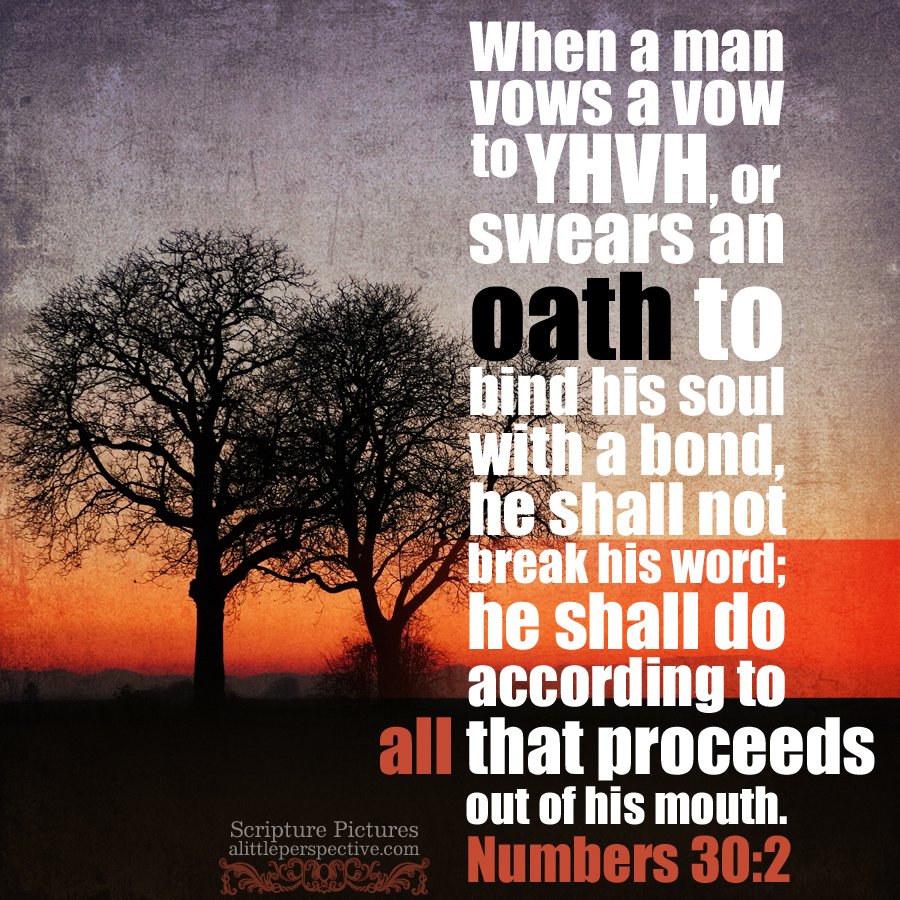
First occurrence
“Now therefore swear to me here by God that you will not deal falsely with me, nor with my son, nor with my son’s son; but according to the kindness that I have done to you, you shall do to me, and to the land wherein you have sojourned.” Gen 21:23
The primitive root
Strong’s H7650, שבע shaba, “to swear an oath.” The ancient pictographs:
shin ש = two front teeth (sharp, press, eat, two, again)
bet ב = house (house, household, family, in, within)
ayin ע = eye (watch, know, shade)
The parable being told by the Hebrew Root Word is of that which passes through the teeth (shin, i.e., spoken words) which the family (bet, not just those who share the same tent, but also the entire extended clan) will watch over (ayin) to ensure compliance. Interestingly, this verb is also the root for the number seven, sheba, which shares the same pictographs. The connection lies in the ancient practice where “to swear an oath” meant literally “to seven oneself.” Seven was a sacred number across the ancient world, and oaths were often reinforced by repeating the oath seven times, offering seven sacrifices, or securing seven witnesses and pledges, serving as a testament to the oath-taker’s sincerity.
For example, in Gen 21:27-31, Abraham and Abimelech make a covenant with seven ewe lambs, linking the oath to the place name Beersheba, meaning “well of the oath” or “well of the seven.”
And this is why, when God swore an oath to Abraham, Abraham had assurance that God would do as He had sworn (Gen 22:16-18). And this is why we have the same unshakeable assurance that God will also keep the promises He has made to us (Heb 6:13-18).









Leave a Reply