Today’s Hebrew Testament chronological reading is in Deuteronomy 17 and 18.
The Psalms/ Proverbs reading is in Psalm 106.
The Greek Testament reading is in Mark 2.
ESSENTIAL STUDIES.
Deuteronomy 16:18-18:22, Honor your father and mother summary
Additional studies: Deuteronomy Index
I suggest that God’s authority is absolute. Since there is no one above Him or beside Him, He may do whatever He pleases. Fortunately for us, what pleases Him is to rule righteously and mercifully, with fairness, in order to bring blessing to those under His authority.
Because authority originates with God, its ultimate purpose is His purpose: to bless. To facilitate that blessing among men, God has delegated some of His authority to men. Unlike God’s authority, this delegated authority is not absolute—men cannot do whatever they please. Instead, it is given for a specific purpose—to bless—and therefore each type of authority carries with it rights, responsibilities, and clear boundaries.
DEUTERONOMY OUTLINE of the TEN COMMANDMENTS.
Deu 6:4-11:25, First commandment, Worship YHVH only, explained
Deu 11:26-14:29, Second and Third, Prohibition on idolatry and profanity, explained
Deu 15:1-16:17, Fourth, Honor the Sabbath, explained
Deu 16:18-18:22, Fifth, Honor father and mother, explained
Deu 19:1-21:9, Sixth, Do not murder, explained
Deu 21:10-23:14, Seventh, Do not commit adultery, explained
Deu 23:15-24:7, Eighth, Do not steal, explained
Deu 24:8-9, Ninth, Do not bear false witness, explained
Deu 24:10-26:15, Tenth, Do not covet, explained
Ten Commandments index of studies
Psalm 106, Chiastic structure
Additional studies: Psalms Book Four (90-106) Index
Finally we have a strong {p} paragraph division! Psalm 104, 105, and 106 are all together teaching a single topic, since we have not had a paragraph division since the conclusion of Psalm 103. Psalm 104 recounted YHVH’s awesome works as Creator and Ruler of the universe; Psalm 105 recounted YHVH’s awesome works in creating a people for Himself in Israel, and Psalm 106 seems to be recounting YHVH’s awesome works and His mercy in keeping and maintaining that people, in saving them and bringing them back to Himself time and again, despite the best efforts of flesh, sin, worldliness, evil influence and the like to draw them away from Him permanently. All who are His, He is able to restore! ♥
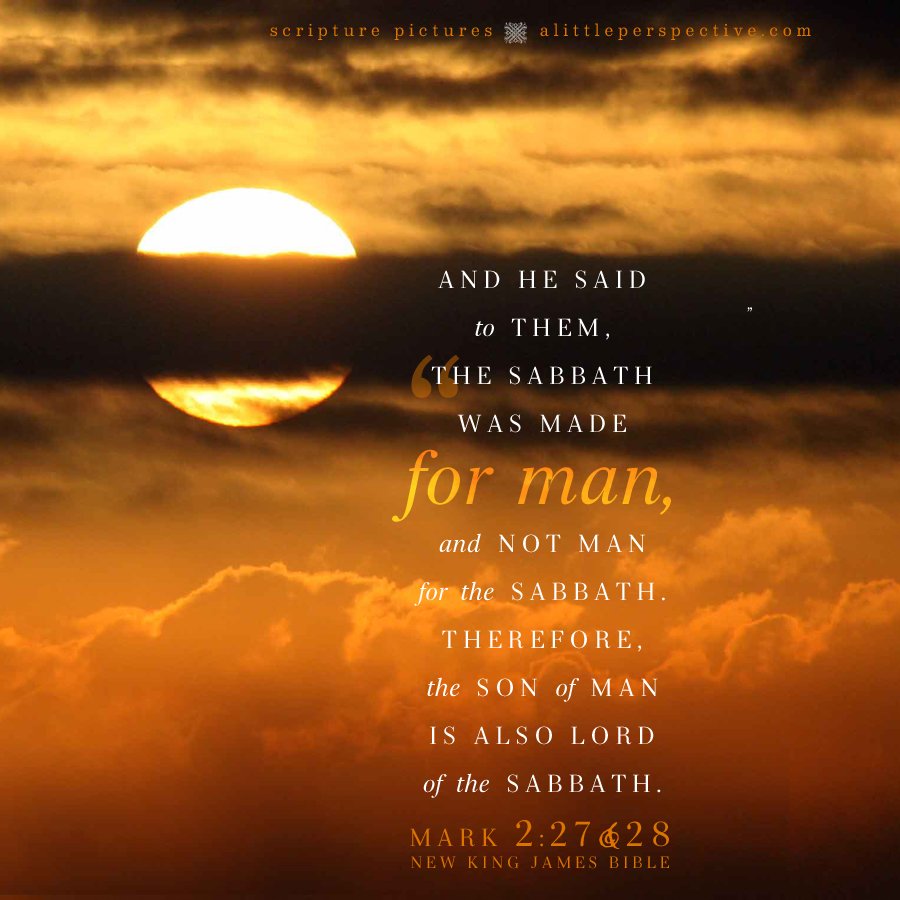
Mark 2, Lord of the Sabbath
Additional studies: Mark Index
We who have been raised with an anti-Torah bias read that Jesus is Lord of the Sabbath and automatically assume that, because He is Lord of it, He can now disregard the Sabbath at will. But does being Lord of something mean that you now disregard it?
The biblical principle of rulership is to care for, protect, bless, and uphold what is under your authority. It is man’s way of thinking to say that a ruler may disregard what is under him; in God’s way of thinking, a ruler upholds what is under him. We see this clearly in the fact that God Himself obeys His own Torah. His Torah is His Word, and His Word is Himself—breathed from His Spirit—and He cannot be faithless to Himself (Rom 3:4).
THREE-YEAR BIBLE.
The three-year plan is here.
Today’s reading is in Ezekiel 48.
Suggested study: Ezekiel 48, Bible for Beginners.







Leave a Reply