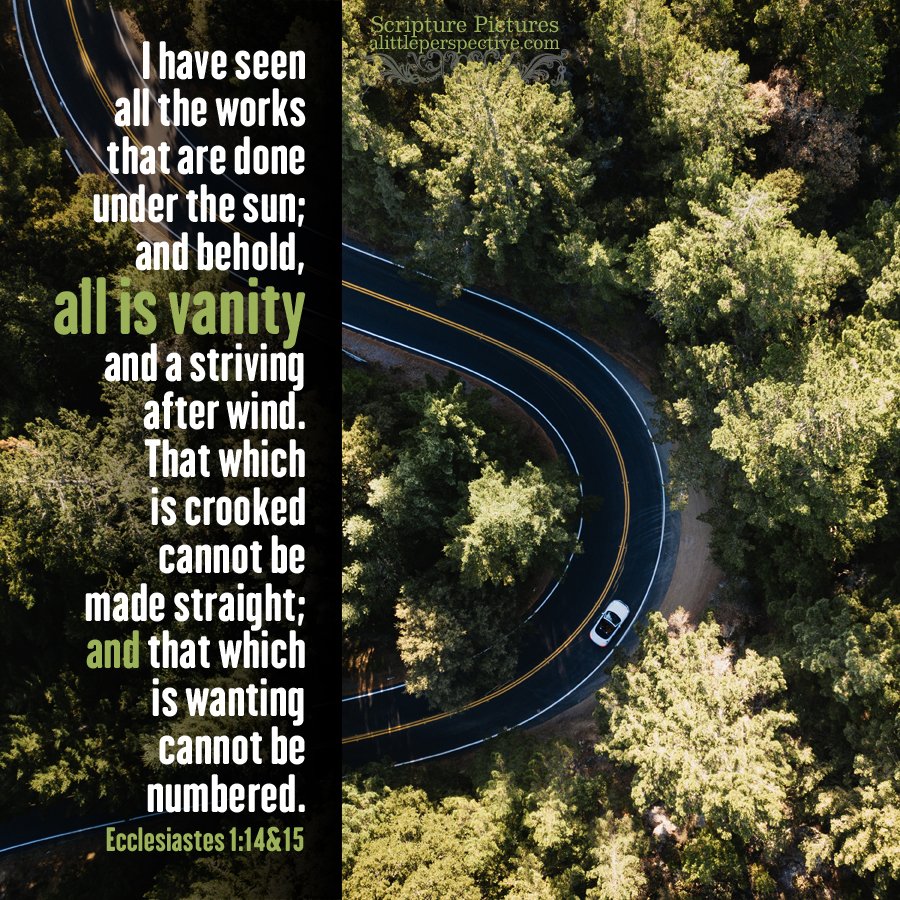
Today’s Hebrew Testament chronological reading is in Ecclesiastes 1 and 2.
The Psalms/ Proverbs reading is in Psalm 5.
The Greek Testament reading is in Luke 13.
ESSENTIAL STUDIES.
Ecclesiastes 1 and 2, Chiastic structures
Additional studies: Ecclesiastes Index
This was very distressing for Solomon, but he discovered anew an important spiritual law: man’s works do not have eternal profit, but only benefit the man in his lifetime (which, since life ends, he viewed with despair as a bad thing).
Life on this side of heaven ends, but life does not end. But since the plan of salvation was veiled even to Solomon for all his great wisdom, he did not have a clear understanding of his future hope.
His hatred of his life, because of learning this principle, I think probably was the root of bitterness that caused him to descend into idolatry. But, when enough time had passed, and he had increased in the even greater wisdom that lies on the other side of this spiritual law, he realized that it was a gift from God to enjoy the present good benefit of your labor (Ecc 2:24), for God gives wisdom with joy to the good (Ecc 2:26, as opposed to wisdom with despair, Ecc 1:18). In other words, he learned contentment: the fruit of trust and rest in God.
Psalm 5, Ordered Prayer
Additional studies: Psalms Book One: 1-41 Index
Isn’t it amazing that when someone orders their prayer in the morning, he then looks up: he waits expectantly for the answer, as a watchman diligently scans the horizon from his watchtower. Prayer, in the Hebraic worldview, carries with it the expectation of the answer; and is never a fruitless exercise.
Luke 13, Loosing the Sabbath Commandmet
Additional studies: Luke Index
The synagogue ruler equated healing with work. Over time, the Pharisees, chief priests, and other religious leaders added burdens to the Sabbath commandment, so that doing just about anything on the Sabbath came to be prohibited. But God did not prohibit every activity, just the work one does to provide for needs, whether of income, maintaining the household or property or business, or other “daily toil” as the result of Adam’s sin (Gen 3:17-19). The Sabbath is a gift of grace, a respite from the daily toil of life, a lifting of the consequence of our sin. Now we have a day, instead of being consumed with pursuing responsibilities, we may be consumed with pursuing Him. And that is what everyone in the town was doing, by being in the synagogue on the Sabbath.
THREE-YEAR BIBLE.
The three-year plan is here.
Today’s reading is in Nehemiah 1.
Suggested study: Nehemiah 1, Bible for Beginners.








Leave a Reply